
Phnom Kulen: Cambodia’s Sacred Mountain and Birthplace of the Khmer Empire
Introduction
Phnom Kulen is one of Cambodia’s most sacred and historically important destinations. Located about 50 kilometers northeast of Siem Reap, Phnom Kulen is a mountain range, national park, spiritual center, and popular natural retreat known for its waterfalls, ancient carvings, jungle landscapes, and religious significance.
Often referred to as the “birthplace of the Khmer Empire,” Phnom Kulen holds deep importance in Cambodian history. In 802 AD, King Jayavarman II proclaimed independence from Java on this sacred mountain and established the Khmer Empire, which later built the magnificent temples of Angkor.
Today, Phnom Kulen attracts both local pilgrims and international travelers seeking a combination of history, spirituality, nature, and adventure.
Historical Importance of Phnom Kulen
Phnom Kulen played a central role in the formation of the Khmer Empire. According to historical inscriptions, King Jayavarman II performed a sacred ceremony on the mountain to declare Cambodia an independent kingdom and himself a universal monarch or “Devaraja.”
This event marked the beginning of one of Southeast Asia’s greatest civilizations. Because of this, Phnom Kulen is considered a holy mountain by Cambodians and remains an important pilgrimage site.
The ancient city known as Mahendraparvata once stood on the plateau of Phnom Kulen. Archaeological discoveries using modern laser scanning technology revealed roads, temples, canals, and urban structures hidden beneath the jungle, proving that a sophisticated city existed here centuries before Angkor Wat was built.
Phnom Kulen National Park
Phnom Kulen National Park was established to protect the mountain’s cultural and natural heritage. The park covers forests, rivers, waterfalls, archaeological sites, and wildlife habitats.
Visitors come to Phnom Kulen to enjoy:
- Cool mountain air
- Scenic jungle landscapes
- Waterfalls and swimming areas
- Ancient temples and carvings
- Religious pilgrimage sites
- Hiking and nature exploration
The area is especially popular during weekends and Cambodian holidays when local families travel there for picnics and spiritual visits.
The River of a Thousand Lingas
One of Phnom Kulen’s most famous attractions is the “River of a Thousand Lingas,” located along a shallow section of the riverbed.
Kbal Spean is often associated with similar river carvings, but Phnom Kulen also contains sacred carvings directly within the riverbed. Hundreds of lingas, symbols associated with the Hindu god Shiva, were carved into the sandstone beneath flowing water.
The carvings date back to the Angkorian period and were designed to spiritually bless the water before it flowed downstream toward Angkor. Many carvings also depict Hindu deities, lotus patterns, and sacred symbols.
The flowing holy water continues to hold spiritual significance for Cambodian visitors today.
The Reclining Buddha
At the summit area of Phnom Kulen stands a large reclining Buddha statue carved from natural sandstone.
Preah Ang Thom is the mountain’s most important religious temple. The giant Buddha, approximately eight meters long, rests atop a massive rock and is one of Cambodia’s most sacred Buddhist sites.
Pilgrims visit the temple to pray, offer incense, and receive blessings from monks. The atmosphere is peaceful and deeply spiritual, with colorful prayer flags, traditional offerings, and panoramic views across the surrounding forest.
Many Cambodians believe Phnom Kulen possesses sacred spiritual power, and Preah Ang Thom remains an active place of worship throughout the year.
Phnom Kulen Waterfall
The waterfalls of Phnom Kulen are among the most popular natural attractions near Siem Reap.
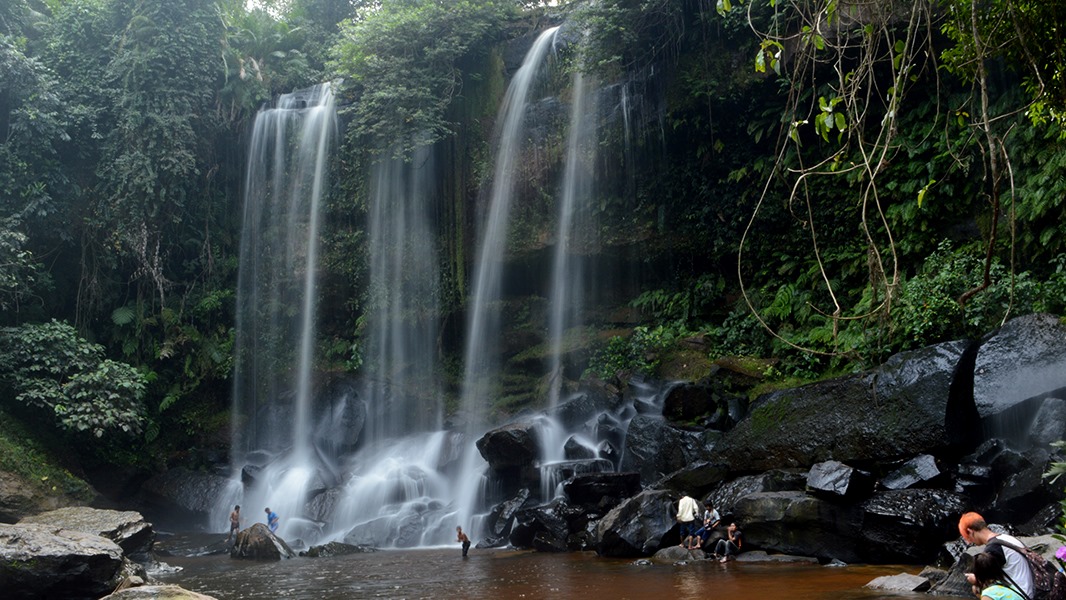
Phnom Kulen Waterfall features multiple levels surrounded by lush tropical forest. The larger waterfall drops dramatically into a wide pool where visitors can swim and relax.
The waterfalls became internationally famous after appearing in the movie Lara Croft: Tomb Raider starring Angelina Jolie.
During the rainy season, the waterfalls become especially powerful and beautiful, while the dry season offers calmer waters and easier access.
Local food stalls, hammocks, and picnic areas nearby make the waterfall a favorite weekend destination for Cambodian families.
Wildlife and Nature
Phnom Kulen’s forests contain a variety of plant and animal life. The national park protects important ecosystems that include:
- Tropical forest vegetation
- Rare bird species
- Butterflies and insects
- Small mammals and reptiles
- Seasonal streams and natural pools
The mountain’s cooler climate and elevated terrain provide a refreshing escape from the heat of the plains below.
Nature lovers can enjoy hiking, photography, birdwatching, and jungle exploration throughout the park.
Spiritual and Cultural Significance
For Cambodians, Phnom Kulen is much more than a tourist destination. It is a sacred mountain deeply connected to religion, history, and national identity.
Many local visitors travel to Phnom Kulen to:
- Pray for good fortune
- Make offerings to ancestors
- Receive blessings from monks
- Celebrate religious festivals
- Bathe in sacred waterfall water
Traditional beliefs surrounding the mountain blend Hindu and Buddhist influences that have shaped Cambodian culture for centuries.
The mountain is particularly busy during Khmer New Year and other important religious holidays.

Best Time to Visit Phnom Kulen
Phnom Kulen can be visited year-round, but each season offers a different experience.
Rainy Season (May to October)
- Powerful waterfalls
- Lush green forests
- Cooler temperatures
- Scenic landscapes
Dry Season (November to April)
- Easier road access
- Better hiking conditions
- Clear skies for photography
- Comfortable sightseeing
The best time for waterfalls is usually between July and December.
How to Get to Phnom Kulen
Most visitors travel to Phnom Kulen from Siem Reap by:
- Private car
- Tuk-tuk
- Guided tour
- Motorbike
The journey usually takes about 1.5 to 2 hours depending on road conditions and traffic.
Because the mountain road is steep and winding, transportation regulations sometimes allow vehicles to travel uphill and downhill during designated time periods.
Many travelers combine Phnom Kulen with nearby attractions such as:
- Beng Mealea Temple
- Banteay Srei Temple
- Floating villages
- Countryside tours
Travel Tips for Visitors
When visiting Phnom Kulen, travelers should consider the following tips:
- Wear comfortable walking shoes
- Bring swimwear and towels
- Carry sunscreen and insect repellent
- Dress respectfully at religious sites
- Bring cash for entrance fees and local vendors
- Visit early to avoid crowds
- Stay hydrated during hot weather
Respectful behavior is especially important at temples and sacred areas.
Conclusion
Phnom Kulen offers a unique combination of history, spirituality, archaeology, and natural beauty. As the birthplace of the Khmer Empire and one of Cambodia’s holiest mountains, it provides visitors with a deeper understanding of the country’s cultural heritage.
From sacred river carvings and ancient temples to jungle waterfalls and panoramic landscapes, Phnom Kulen remains one of the most rewarding destinations in Cambodia. Whether travelers seek adventure, relaxation, or spiritual discovery, the mountain delivers an unforgettable experience beyond the famous temples of Angkor.


