
Angkor Wat: The Timeless Wonder of Cambodia
Introduction
Angkor Wat is one of the most remarkable archaeological and religious monuments in the world. Located near the city of Siem Reap, this magnificent temple complex is the pride of Cambodia and a symbol of the nation itself, even appearing on the Cambodian flag. Every year, millions of visitors travel from around the globe to witness the beauty, history, and spiritual atmosphere of this UNESCO World Heritage Site.
Built in the early 12th century during the height of the Khmer Empire, Angkor Wat was originally constructed as a Hindu temple dedicated to the god Vishnu. Over time, it gradually transformed into a Buddhist temple and remains an important religious site today. With its towering spires, intricate carvings, vast moats, and stunning architecture, Angkor Wat stands as a masterpiece of ancient engineering and artistic achievement.
The History of Angkor Wat
Angkor Wat was commissioned by King Suryavarman II in the early 1100s. At that time, the Khmer Empire was one of the most powerful civilizations in Southeast Asia, ruling over much of present-day Cambodia, Thailand, Laos, and Vietnam.
The temple was designed to serve several purposes:
- A state temple dedicated to Vishnu
- A political symbol of imperial power
- A spiritual center
- Eventually, the king’s mausoleum
Construction likely took more than 30 years and required thousands of workers, craftsmen, sculptors, and engineers. Massive sandstone blocks were transported from quarries located many kilometers away, demonstrating the extraordinary organizational abilities of the Khmer civilization.
After the decline of the Khmer Empire in the 15th century, many temples around Angkor were abandoned to the jungle. However, Angkor Wat remained an active religious site and continued to attract Buddhist monks and pilgrims.

Architecture and Design
Angkor Wat is considered one of the greatest architectural achievements in human history. The temple complex covers approximately 162 hectares, making it the largest religious monument in the world.
Symbolic Layout
The design of Angkor Wat reflects Hindu cosmology. The central towers symbolize Mount Meru, the mythical home of the gods, while the surrounding walls and moats represent mountain ranges and the cosmic ocean.
The temple faces west, which is unusual because most Khmer temples face east. Historians believe this orientation may be connected to Vishnu, who is associated with the west, or to funerary symbolism.
The Five Towers
The iconic five lotus-shaped towers are the most recognizable feature of Angkor Wat. The central tower rises about 65 meters above the ground and dominates the skyline.
Visitors entering the temple are greeted by:
- Long sandstone galleries
- Detailed bas-reliefs
- Massive courtyards
- Sacred libraries
- Steep staircases leading to upper levels
Bas-Reliefs and Carvings
The walls of Angkor Wat are covered with some of the finest carvings in Southeast Asia. These bas-reliefs stretch for hundreds of meters and depict scenes from Hindu epics such as:
- Ramayana
- Mahabharata
- Churning of the Ocean of Milk
- Historical battles of the Khmer Empire
The carvings demonstrate exceptional artistic skill and provide valuable insight into Khmer culture, warfare, religion, and daily life.
Religious Importance
Although Angkor Wat was originally a Hindu temple, it gradually transformed into a Buddhist site between the 13th and 14th centuries. Today, Buddhist monks continue to worship there, and visitors can often see monks performing rituals or offering blessings.
The temple represents a unique blend of Hindu and Buddhist traditions, reflecting Cambodia’s long spiritual history.
For Cambodian people, Angkor Wat is far more than a tourist attraction. It is a national symbol of pride, resilience, and cultural identity.
Rediscovery by the Western World
While Angkor Wat was never truly “lost” to local Khmer people, it gained worldwide attention in the 19th century after French naturalist Henri Mouhot published descriptions of the temple.
His writings introduced Angkor to Europe and sparked global fascination with the Khmer civilization. Archaeologists and historians later began restoration projects to preserve the temples from damage caused by time, weather, and jungle growth.
UNESCO World Heritage Site
In 1992, Angkor was officially designated as a UNESCO World Heritage Site. This recognition helped increase international support for conservation and restoration efforts.
Today, organizations from around the world collaborate to protect the temples from:
- Environmental damage
- Erosion
- Tourism pressure
- Vegetation growth
- Structural deterioration
Preservation remains a major challenge due to the immense size of the Angkor Archaeological Park and the growing number of visitors each year.
Sunrise at Angkor Wat
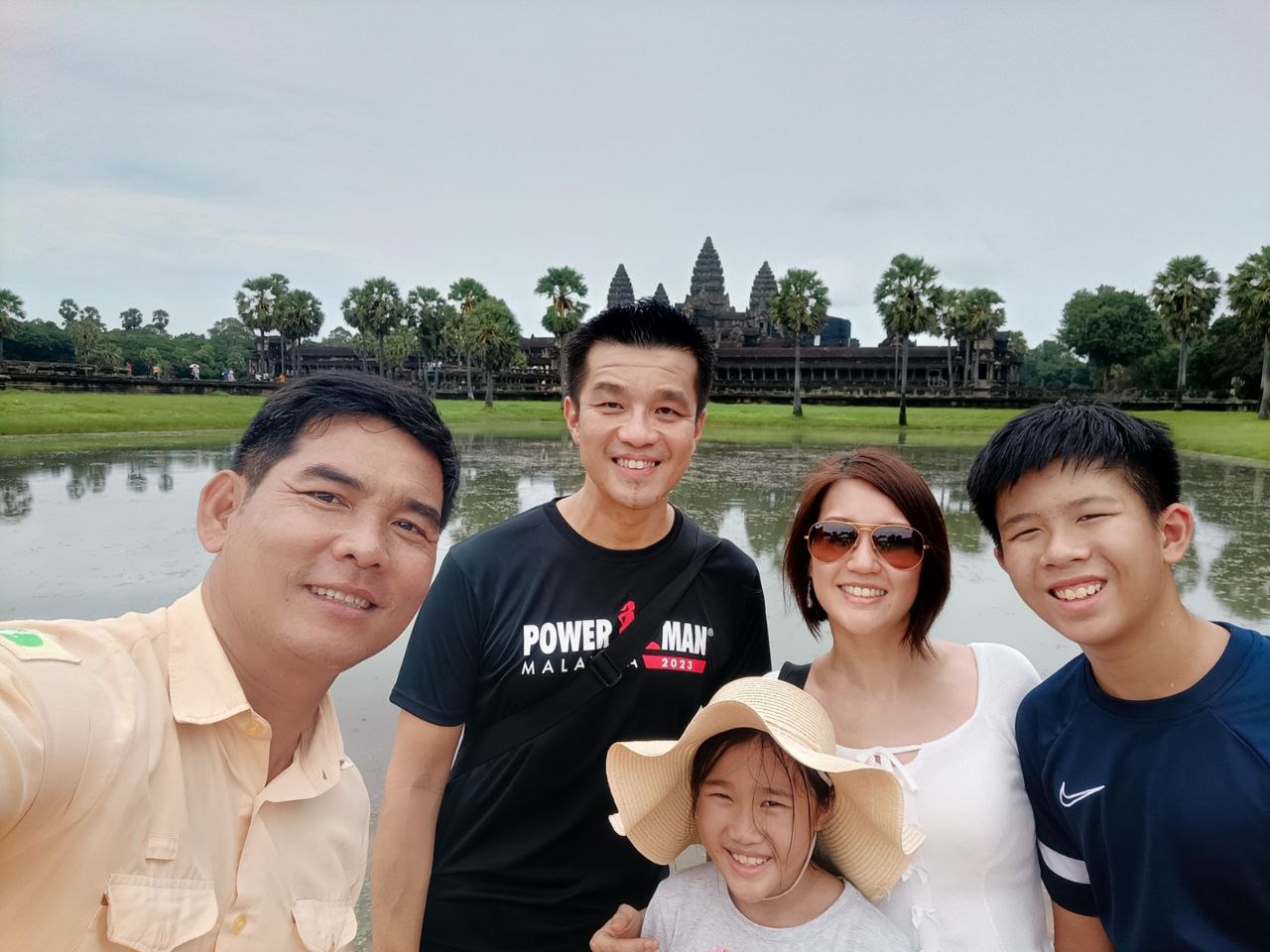
One of the most famous experiences in Cambodia is watching the sunrise at Angkor Wat. Before dawn, visitors gather around the reflecting pools in front of the temple to witness the silhouette of the towers illuminated by the rising sun.
The sunrise creates a magical atmosphere and offers excellent photography opportunities. For many travelers, it becomes the highlight of their visit to Cambodia.

Other Famous Temples Near Angkor Wat
The Angkor Archaeological Park contains hundreds of temples and ancient structures. Some of the most popular include:
Bayon Temple
Known for its giant stone faces, Bayon is located in the center of the ancient city of Angkor Thom. The temple features more than 200 smiling faces carved into massive towers.
Ta Prohm
Famous for its enormous tree roots growing over temple ruins, Ta Prohm became internationally recognized after appearing in the movie Tomb Raider.
Angkor Thom
This ancient royal city served as the last great capital of the Khmer Empire and contains many important temples and monuments.
Banteay Srei
Often called the “Citadel of Women,” Banteay Srei is admired for its delicate pink sandstone carvings and exceptional artistic detail.
Tourism and Local Economy
Tourism centered around Angkor Wat plays a crucial role in Cambodia’s economy. Millions of travelers visit Siem Reap every year, supporting hotels, restaurants, transportation services, local guides, and artisans.
Professional tour guides help visitors understand the history, symbolism, and stories hidden within the temples. Guided tours provide deeper cultural insight and allow travelers to appreciate the significance of Angkor beyond its visual beauty.
Best Time to Visit
The best time to visit Angkor Wat is during Cambodia’s dry season, from November to March, when temperatures are cooler and rainfall is limited.
Tips for visiting include:
- Start early to avoid crowds and heat
- Wear comfortable clothing
- Bring water and sunscreen
- Dress respectfully for religious sites
- Hire a knowledgeable local guide
Cultural Legacy
Angkor Wat remains one of humanity’s greatest cultural treasures. It represents the brilliance of Khmer civilization and continues to inspire architects, historians, artists, and travelers worldwide.
The temple’s enduring beauty, spiritual significance, and historical importance make it an unforgettable destination for anyone interested in history, culture, architecture, or religion.
Conclusion
Angkor Wat is far more than an ancient temple. It is a symbol of Cambodia’s soul, a masterpiece of human creativity, and a living connection to the past. From its majestic towers and intricate carvings to its spiritual atmosphere and historical significance, Angkor Wat continues to captivate visitors from every corner of the world.
A journey to Angkor is not simply a sightseeing trip — it is an experience that reveals the grandeur of one of the world’s greatest civilizations and leaves a lasting impression on all who visit.


